PricingLaws · The U.S. personalized pricing law hub

U.S. Personalized Pricing Laws

Federal and state personalized pricing laws, explained in plain English, with a practical roadmap to compliance. For legal, compliance and pricing teams.

Updated Oct 6, 2026Based on primary legal sourcesNot legal adviceHow We Verify

Which States Have Personalized Pricing Laws?

The strongest current status in each of the seven tracked jurisdictions, as of October 6, 2026.

Tracked state laws and status

  • New York: Disclosure Law in Force. Algorithmic Pricing Disclosure Act; One Fair Price Act
  • Maryland: Ban in Force. Protection From Predatory Pricing Act
  • Connecticut: Ban in Force. Surveillance pricing ban (Senate Bill 4); Surveillance pricing ban, revised (House Bill 5563)
  • New Jersey: Enacted, Not Yet in Effect. Fair Price Protection Act
  • Colorado: Related Laws Only. Colorado Privacy Act: profiling opt-out; Automated decision tools law; Surveillance prices and wages bill
  • California: Related Laws Only. Surveillance pricing ban; Common pricing algorithms law

The map shows the strongest current status in each state. Related measures and source detail appear in the full tracker.

Ban in Force

Disclosure Law in Force

  • New YorkDisclosure law in effect since Nov 10, 2025

Enacted, Not Yet in Effect

Related Laws Only

  • CaliforniaRelated algorithm and privacy rules only
  • ColoradoRelated privacy and AI rules only
Open the Law Tracker →

Whitepaper: Explainable and Governable Personalized Pricing

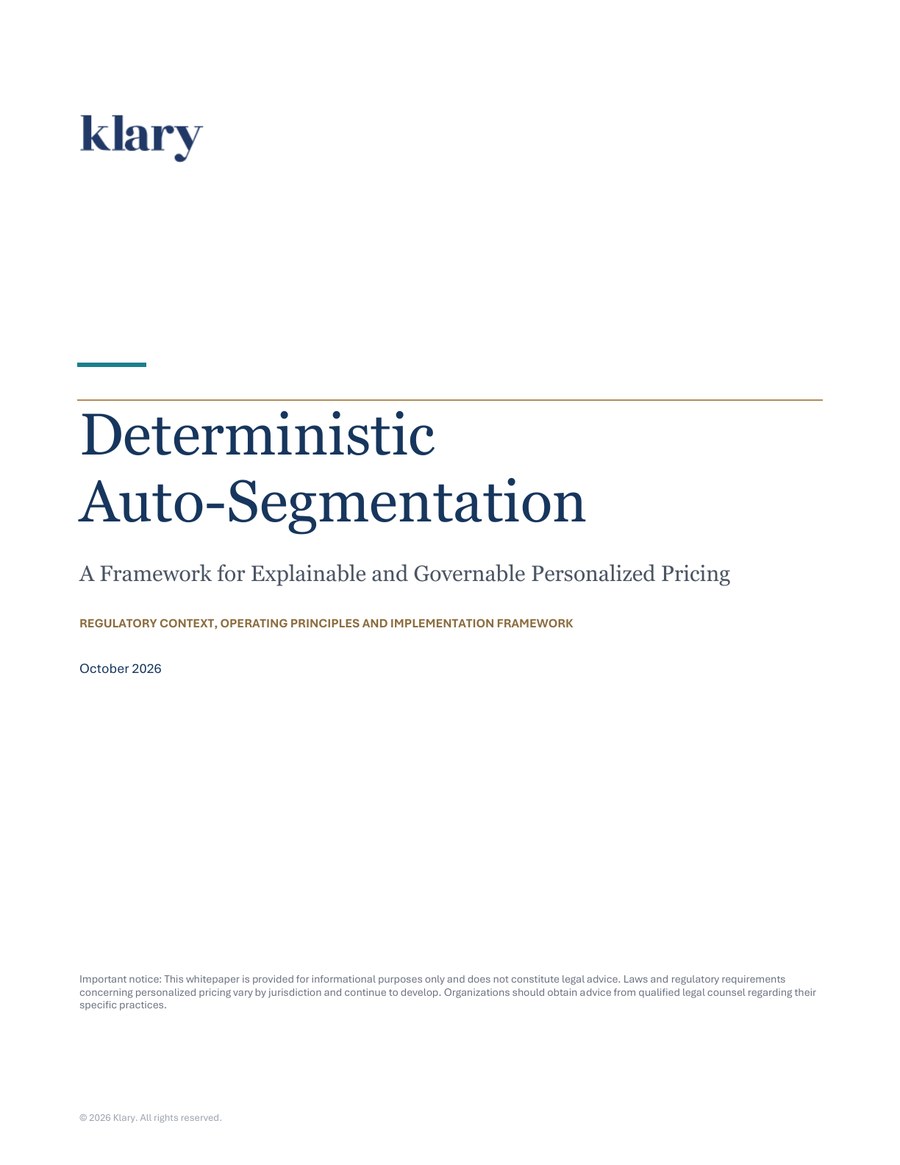
Deterministic Auto-Segmentation links explicit pricing rules to reproducible decision records in a five-stage compliance roadmap.

Cover of the Deterministic Auto-Segmentation whitepaper

Whitepaper · October 2026

A pricing architecture, not a legal exemption.

What Personalized Pricing Means

Personalized pricing is the practice of charging different customers different prices or offers for the same product, based on information about them or a group to which they belong. Legislation refers to the most data-driven form as surveillance pricing.

Read the Definitions →

Current Legal Status

As of October 6, 2026, Maryland and Connecticut have surveillance pricing bans in force, New York requires a disclosure for algorithmically set prices, and New Jersey’s grocery ban takes effect on August 1, 2027. The FTC has proposed, but not adopted, a disclosure policy.

Open the Law Tracker →

How Businesses Can Comply

Regulators expect businesses to disclose the basis for a personalized price, identify the data used and reproduce past pricing decisions on request. The compliance framework sets out five stages for meeting those expectations.

Read the Framework →

Resources

The law tracker, applicability check, guides and compliance framework.

Recent Legal Developments

Verified changes to federal and state measures.

All Updates →